Battling Shipboard Fires: A Comprehensive Guide to Maritime Fire Safety
Categories: Security

About Course

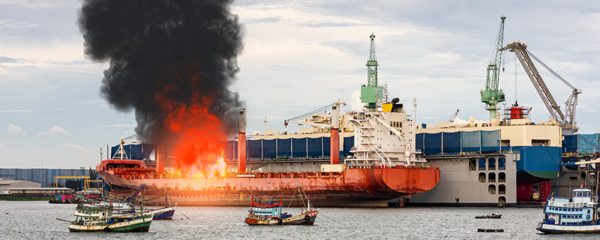
The maritime industry faces a constant and formidable adversary: fire. In the unforgiving environment of the open sea, even a small spark can escalate into a devastating disaster. This comprehensive course delves deep into the complex world of shipboard fire safety—examining its history, current challenges, and future innovations. Students will explore high-profile case studies, cutting-edge technologies, and international safety standards to gain a 360-degree understanding of fire prevention, detection, suppression, and response aboard ships.

Through a blend of historical analysis, technical knowledge, and real-world applications, this course equips maritime professionals, engineers, and safety officers with the tools and insights they need to combat fire hazards effectively. From advanced firefighting robotics and AI-integrated detection systems to human factors training and regulatory compliance, you’ll gain the skills to protect lives, cargo, and vessels from one of the sea’s most dangerous threats.

Show More

What Will You Learn?

  • Understand the historical context and impact of shipboard fire incidents
  • Identify common causes of maritime fires and risk factors
  • Learn modern fire prevention techniques and safety technologies
  • Explore cutting-edge fire detection systems using IoT and AI
  • Discover innovations in firefighting, including drones and robotics
  • Evaluate environmentally friendly firefighting solutions
  • Analyze international fire safety regulations and standards
  • Enhance crew safety through simulation and VR-based training
  • Understand the importance of cross-industry collaboration for fire safety
  • Gain practical insights from real-life maritime fire case studies

Course Content

Introduction
This introductory section sets the stage by highlighting the diverse fire hazards ships face, from flammable cargo to engine room malfunctions. It underscores the critical importance of fire safety in maritime operations and outlines the industry's challenges in prevention, response, and technology adoption. Students will gain an appreciation for the stakes involved and the need for comprehensive safety measures.

  • Overview of the Diverse Fire Hazards Faced by Ships
    00:00
  • The Crucial Role of Fire Safety in Maritime Operations
    00:00
  • Challenges Faced by the Maritime Industry in Shipboard Fire Prevention
    00:00

Chapter 1: Historical Context of Shipboard Fires
This chapter explores early shipboard fire incidents, tracing the evolution of fire risks and their growing complexity over time. Through case studies—including the INS Sindhurakshak tragedy—students learn how catastrophic fires have influenced modern safety protocols and shaped the development of maritime fire safety strategies.

Chapter 2. Importance of Fire Safety in the Maritime Industry
This chapter emphasizes the wide-reaching consequences of shipboard fires, from financial loss and litigation to risks to human life and cargo. It presents a compelling case for investing in fire safety, detailing how preventive measures protect passengers, crew, and infrastructure.

Chapter 3: Anatomy of Shipboard Fires
Delving into the mechanics of how fires start and spread on ships, this chapter identifies key risk factors such as fuel leaks, electrical faults, and tight spaces. Students gain insight into the unique suppression challenges posed by confined maritime environments.

Chapter 4: Fire Prevention Measures
Here, students explore proactive strategies to prevent fires, including advanced lagging, insulation technologies, and fuel leakage detection. The chapter presents modern engineering solutions designed to minimize fire hazards before ignition can occur.

Chapter 5: Fire Detection Systems: Advancements and Innovations
This chapter focuses on the technologies behind fire detection, from heat and smoke sensors to integrated IoT and AI-based systems. It illustrates how automation and real-time data analysis are revolutionizing early warning and response accuracy on ships.

Chapter 6: Emerging Fire Prevention Technologies
Students learn about the next generation of fire-resistant materials, coatings, and smart barriers. This chapter showcases how innovation in materials science is enabling ships to withstand higher temperatures and prevent fire spread more effectively.

Chapter 7: Firefighting Techniques and Technology Advancements
This chapter introduces modern firefighting equipment beyond the traditional extinguisher, including advanced hoses, foam systems, and AI-assisted suppression devices. It highlights how technology is reshaping firefighting tactics for confined, high-risk shipboard environments.

Chapter 8: Drones and Robots for Shipboard Firefighting
Focusing on autonomous and remote-controlled firefighting tools, this chapter explains how drones and robots are used for aerial surveillance, thermal imaging, and firefighting in inaccessible or hazardous areas, significantly enhancing safety and efficiency

Chapter 9: Research for Safer Firefighting Solutions
In this chapter, students explore ongoing research into environmentally friendly firefighting foams and the challenges of eliminating harmful substances like PFAS. It provides insights into the scientific and regulatory efforts driving safer suppression alternatives.

Chapter 10: Safety Measures, Regulations, and Technological Compliance
This chapter outlines key international fire safety regulations and industry standards. Students learn how ships ensure compliance while integrating new technologies, balancing innovation with regulatory obligations to maintain operational readiness.

Chapter 11: Addressing Human Errors and Training with Technology
Human error is a leading cause of shipboard fires. This chapter examines how simulation, VR, and other training technologies are being used to enhance crew preparedness, reduce mistakes, and improve emergency response under realistic conditions.

Chapter 12: Industry Collaboration for Safety and Technological Development
The final content chapter emphasizes collaboration across stakeholders—shipbuilders, regulators, tech firms, and operators—to share data, lessons learned, and drive technological improvements. It illustrates how collective action strengthens fire safety at a systemic level.

Conclusion
The course concludes by reinforcing the message that shipboard fire safety is an evolving, multidisciplinary challenge. Through technological innovation, rigorous training, and global collaboration, the maritime industry can continue making strides toward a safer future for all vessels at sea.

References

wpChatIcon
    wpChatIcon