Geoengineering: Can Technology Reverse Climate Change
Categories: Security

About Course

As climate change continues to accelerate with devastating consequences across the globe, the search for radical, innovative solutions is more urgent than ever. Geoengineering—once the domain of science fiction—is now a fast-emerging field that explores how technology could potentially counteract climate change on a global scale. This course dives deep into the bold and controversial world of geoengineering, where solar radiation management and carbon dioxide removal techniques offer both hope and hazards.

Students will explore the science, technologies, ethics, and real-world experiments associated with geoengineering, gaining insights into both its potential and its pitfalls. Whether you’re a student of environmental science, a tech enthusiast, or a concerned global citizen, this course will equip you with the critical thinking skills and knowledge needed to evaluate one of the most provocative climate solutions of our time.

Show More

What Will You Learn?

  • Understand the fundamental concepts of geoengineering and climate science
  • Explore Solar Radiation Management (SRM) and its associated technologies
  • Analyze Carbon Dioxide Removal (CDR) methods and their effectiveness
  • Compare the feasibility, benefits, and risks of SRM and CDR
  • Evaluate real-world geoengineering case studies and pilot projects
  • Examine the ethical, legal, and societal dimensions of geoengineering
  • Gain awareness of public policy and global governance challenges
  • Critically assess whether geoengineering can or should be part of the climate solution toolbox

Course Content

Introduction
Geoengineering refers to the deliberate manipulation of the Earth’s climate system using advanced technologies to mitigate the effects of global warming. As climate change leads to rising temperatures, melting ice caps, and extreme weather events, the urgency to explore alternative solutions grows. This section introduces the concept of geoengineering, its necessity in the face of slow emissions reduction, and its potential as a controversial yet powerful tool for climate intervention.

  • Definition of geoengineering
    00:00
  • Brief explanation of climate change and its impacts
    00:00
  • The need for a solution to mitigate climate change
    00:00
  • Types of Geoengineering
    00:00

Solar Radiation Management (SRM)
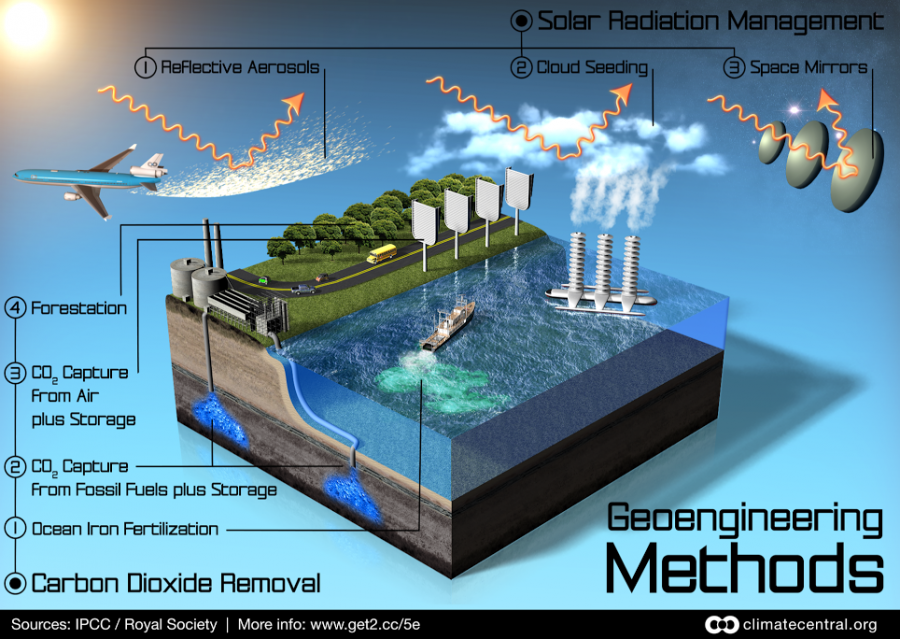
SRM techniques such as stratospheric aerosol injection, marine cloud brightening, and space reflectors aim to reduce solar heating by enhancing the Earth’s reflectivity. While SRM could rapidly cool the planet, it also poses major risks including changes in weather patterns, ozone depletion, and geopolitical tensions. This section explores how SRM works, its theoretical effectiveness, and the challenges that come with controlling such powerful tools.

Carbon Dioxide Removal (CDR)
CDR strategies focus on directly removing greenhouse gases from the atmosphere through methods like afforestation, ocean fertilization, bioenergy with carbon capture and storage (BECCS), and direct air capture. This section discusses the long-term benefits of CDR, its relative safety compared to SRM, and its slower pace of impact, comparing both strategies in terms of scalability, cost, and sustainability.

Feasibility of Geoengineering
While geoengineering technologies hold promise, their real-world feasibility remains uncertain. This section examines the state of scientific research, technical readiness, and economic considerations for deploying geoengineering at scale. It also addresses the unpredictable consequences and the lack of global governance frameworks to manage deployment responsibly.

Geoengineering in Action
Real-world geoengineering experiments and pilot programs—such as cloud brightening trials or carbon capture installations—are beginning to emerge across various countries. This section reviews key case studies, showcasing both breakthroughs and setbacks, offering insight into the practical challenges of translating theory into action on a planetary scale.

Ethical and Societal Implications of Geoengineering
Beyond technical hurdles, geoengineering raises profound ethical questions: Who gets to control the climate? What if unintended side effects harm vulnerable regions? This section explores the moral dilemmas, social justice issues, and governance challenges posed by geoengineering, emphasizing the need for inclusive public dialogue and international collaboration before deployment.

Conclusion
Geoengineering offers a compelling, if controversial, addition to our climate response toolkit. This section summarizes the key insights from the course, stresses the importance of research, regulation, and ethical responsibility, and calls for proactive engagement from scientists, policymakers, and the public in shaping the future of climate intervention technologies.

wpChatIcon
    wpChatIcon