Hypersonic Wind Tunnel Technology: Exploring High-Speed Aerodynamics and Beyond
Categories: Aerospace

About Course

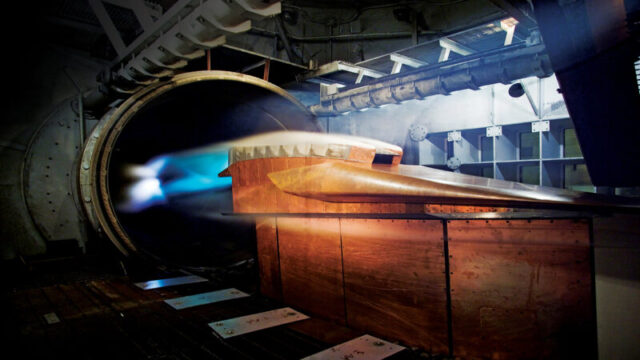
Hypersonic flight represents one of the most extreme frontiers in aerospace engineering, where vehicles travel at speeds greater than Mach 5, encountering intense heat, shockwaves, and aerodynamic forces. Hypersonic wind tunnels are the key to unlocking this realm, allowing engineers and researchers to simulate and study the complex physics of high-speed airflows, material resilience, and propulsion systems. This course takes you on a deep dive into the science, engineering, and applications of hypersonic wind tunnels, covering their design, operation, and role in shaping next-generation aerospace technologies.

Throughout this course, you’ll explore critical aspects such as shockwave interactions, thermal protection systems, scramjet propulsion testing, and real-world applications in both civilian and military aerospace research. You’ll also gain insights into major hypersonic wind tunnel facilities worldwide and emerging advancements in computational modeling. Whether you are an engineer, researcher, or aerospace enthusiast, this course will equip you with the knowledge to understand and contribute to the cutting edge of hypersonic research and development.

Show More

What Will You Learn?

  • The fundamentals of hypersonic aerodynamics, including shockwaves and high-temperature gas dynamics
  • How wind tunnels simulate hypersonic conditions and why they are critical for aerospace research
  • The design and construction of hypersonic wind tunnels, including nozzles, flow control, and instrumentation
  • Testing methodologies for aerodynamic performance, heat transfer, and material resilience
  • The role of computational fluid dynamics (CFD) in hypersonic research and how it integrates with wind tunnel data
  • Case studies of global hypersonic wind tunnel facilities and their contributions to aerospace engineering
  • The impact of hypersonic research on military defense, including hypersonic weapon systems and stealth technologies
  • Future trends in wind tunnel technology, including AI-driven simulations and new testing capabilities

Course Content

Introduction to Hypersonic Wind Tunnels
Hypersonic wind tunnels play a crucial role in studying high-speed aerodynamics, where vehicles travel at speeds greater than Mach 5. This module introduces the fundamentals of hypersonic flight, the extreme challenges it presents, and the significance of wind tunnels in simulating these conditions. By understanding the history and purpose of hypersonic wind tunnels, students will gain insight into their role in advancing aerospace technology and national defense strategies.

  • Understanding Hypersonic Speeds and Challenges
    00:00
  • The Role of Wind Tunnels in Hypersonic Research
    00:00

Principles of Hypersonic Aerodynamics
At hypersonic speeds, air behaves very differently due to shockwave interactions, extreme heat, and boundary layer effects. This module covers fundamental aerodynamic principles, including high-temperature gas dynamics, non-equilibrium flows, and viscous interactions. These principles are essential for designing hypersonic vehicles that can withstand the intense stresses of reentry and sustained high-speed flight.

Design and Construction of Hypersonic Wind Tunnels
Building a hypersonic wind tunnel requires precise engineering to replicate the extreme conditions of high-speed flight. This module explores the infrastructure, nozzle design, instrumentation, and control systems essential for generating stable hypersonic flows. Students will learn about the different types of wind tunnels and their specialized roles in research and development.

Simulating Hypersonic Conditions: Techniques and Challenges
Creating a realistic hypersonic environment in a laboratory setting is complex. This module delves into various simulation techniques, such as shock tubes, expansion tubes, and Ludwieg tubes, which mimic transient and steady-state hypersonic conditions. It also discusses advanced gas heating techniques and flow visualization methods that allow researchers to analyze high-speed airflows effectively.

Aerodynamic Phenomena at Hypersonic Speeds
Hypersonic flight presents unique aerodynamic challenges, such as extreme surface heating, high drag, and flow instabilities. This module examines how vehicle shape influences performance, the importance of thermal protection systems, and stability and control considerations. Understanding these phenomena is key to designing efficient and survivable hypersonic aircraft and spacecraft.

Materials Testing and Heat Shield Development
At hypersonic speeds, materials must endure temperatures exceeding thousands of degrees Celsius. This module explores the selection of high-temperature materials, heat-resistant coatings, and thermal protection system (TPS) designs. It also covers laboratory testing techniques to ensure materials can withstand extreme aerodynamic heating and reentry conditions.

Propulsion Testing in Hypersonic Wind Tunnels
Hypersonic propulsion systems, such as scramjets, operate under highly complex conditions. This module focuses on propulsion testing, covering topics like inlet design, combustion dynamics, and thrust optimization. Students will learn how wind tunnels support the development of advanced propulsion systems for hypersonic aircraft and missiles.

Applications of Hypersonic Wind Tunnel Research
Hypersonic wind tunnel research influences a wide range of aerospace applications. This module highlights how wind tunnels contribute to spacecraft reentry dynamics, next-generation air travel, and military applications. It also discusses the implications for future space exploration, including Mars and deep-space missions.

Integration of Hypersonic Wind Tunnel Data and Computational Methods
Modern aerospace design relies on the synergy between physical experiments and computational modeling. This module examines how wind tunnel data integrates with computational fluid dynamics (CFD) simulations for validation and calibration. Understanding this relationship is vital for accurately predicting aerodynamic behavior in real-world hypersonic conditions.

Case Studies: Global Hypersonic Wind Tunnel Facilities
This module provides an in-depth look at the world's leading hypersonic wind tunnel facilities, including NASA Langley’s Hypersonic Tunnel, Australia’s T5 Wind Tunnel, and Germany’s L2K facility. By studying these case examples, students will understand the capabilities, research focus, and contributions of these cutting-edge testing environments.

The Military Importance of Hypersonic Wind Tunnels
Hypersonic technology has significant military applications, including missile development, stealth aircraft enhancements, and national defense strategies. This module explores how hypersonic wind tunnels aid in the development of hypersonic weapons and their impact on global security. Discussions will cover maneuverability, survivability, and the strategic role of hypersonic vehicles.

Future Trends in Hypersonic Wind Tunnel Technology
As hypersonic research evolves, wind tunnel technology continues to advance. This module discusses emerging trends such as AI-driven simulations, advanced instrumentation, and novel testing methodologies. Students will explore upcoming innovations that will shape the future of hypersonic flight and its real-world applications.

Conclusion: Unveiling the Secrets of Hypersonic Flight
The final module recaps key takeaways from the course and reflects on the future of hypersonic wind tunnel research. It emphasizes the ongoing advancements in aerospace technology and the role of wind tunnels in unlocking the potential of hypersonic flight for defense, space exploration, and next-generation air travel.

wpChatIcon
    wpChatIcon