Photonic Sensors and Detectors: From Fundamentals to Cutting-Edge Applications
Categories: Photonics

About Course

Unlock the transformative world of photonic sensors and detectors — a technology quietly revolutionizing industries from medicine to defense, and environmental science to quantum computing. This comprehensive course takes you on an exciting journey from the core principles of photonic detection to advanced, real-world applications that are reshaping our modern world. Whether you’re captivated by quantum sensing or curious about how light can monitor air quality or even save lives in medical diagnostics, this course illuminates how light-based technologies are becoming central to future innovation.

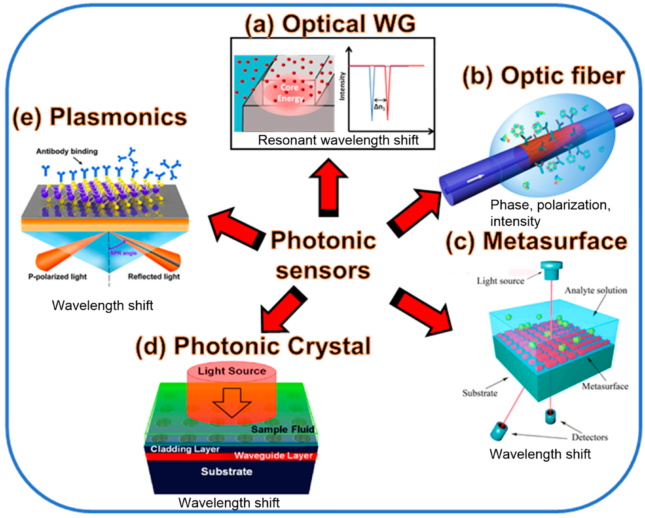
Dive into the intricacies of photodiodes, avalanche detectors, fiber optic sensors, plasmonics, and quantum devices. Explore how photonics is driving Industry 4.0 with smart manufacturing, predictive maintenance, and IoT integration. You’ll also examine how biophotonics is changing the face of healthcare and how sensor networks are enabling precise environmental monitoring and secure, high-speed communication. Designed to spark curiosity and practical understanding, this course is ideal for anyone passionate about science, technology, and the future of sensing.

Show More

What Will You Learn?

  • Understand the fundamental principles of photonic sensors and detectors
  • Learn how photodiodes, CCDs, and SPADs function in real-world applications
  • Explore the design and application of fiber optic and plasmonic sensors
  • Discover how quantum mechanics enhances the sensitivity of modern sensors
  • Study how photonic sensors are applied in Industry 4.0 and smart factories
  • Gain insights into the role of photonics in biomedical imaging and diagnostics
  • Investigate environmental sensing technologies for air quality and gas detection
  • Understand the future of wireless optical communication in sensor networks
  • Explore ethical and privacy issues related to sensor deployment

Course Content

Introduction to Photonic Sensors and Detectors
This chapter introduces the fundamental concepts of photonics and explores the vital role that sensors and detectors play in harnessing light for measurement and communication. Students will gain a foundational understanding of how photonic systems detect, interpret, and respond to changes in light, setting the stage for deeper exploration into the field.

  • Understanding the Basics of Photonics
    00:00
  • Role of Sensors and Detectors in Photonics
    00:00

Principles of Photonic Sensors and Detectors
Delving into the core mechanisms behind light detection, this chapter explains how devices like photodiodes, phototransistors, and charge-coupled devices (CCDs) work. It also introduces advanced detectors such as avalanche photodiodes and single-photon avalanche diodes (SPADs), as well as quantum sensors that count individual photons, highlighting the diverse technologies available for different sensing needs.

Advanced Photonic Sensor Technologies
Students explore cutting-edge sensor innovations, including fiber optic sensors known for precision and flexibility, plasmonic sensors that amplify sensitivity using nanostructures, and quantum sensors capable of ultra-precise measurements. This chapter demonstrates how these advanced devices are shaping fields ranging from structural health monitoring to navigation systems.

Photonic Sensors in Industry 4.0 and Beyond
This chapter investigates how photonic sensors are driving the next industrial revolution, enabling smart manufacturing, predictive maintenance, and real-time quality control. It emphasizes the integration of sensors with Internet of Things (IoT) platforms to create intelligent systems capable of autonomous decision-making and process optimization.

Biophotonics: Illuminating Life Sciences
Focusing on the intersection of photonics and biology, this chapter discusses applications such as fluorescence imaging, optical coherence tomography (OCT), and Raman spectroscopy. These tools provide non-invasive, high-resolution insights into tissues, cells, and molecules, transforming medical diagnostics, cancer detection, and biomedical research.

Emerging Trends in Photonic Sensor Networks
Here, students learn about the evolution of sensor networks powered by photonics, including wireless optical communication, energy-harvesting systems, and distributed sensing. The chapter also addresses the challenges of managing and analyzing data from large-scale sensor deployments, essential for smart cities and environmental monitoring.

Gas Sensing and Environmental Applications
This chapter highlights the role of photonic sensors in detecting gases and monitoring environmental conditions. From assessing air quality to ensuring industrial safety, students will learn how these sensors provide fast, accurate, and non-invasive methods for tracking pollutants and hazardous substances in real-time.

Applications of Photonic Sensors and Detectors
A broad look at the various fields using photonic sensors, this chapter showcases their impact in telecommunications, optical networking, healthcare diagnostics, climate research, and aerospace and defense. Students will see how light-based technologies are integrated across critical infrastructure and scientific endeavors.

Future Prospects and Challenges in Photonic Sensing
Students examine upcoming innovations, such as quantum-enhanced sensing and ubiquitous photonic devices in daily life. The chapter also explores ethical issues related to data collection and privacy, and discusses technical hurdles in cost, integration, and mass adoption.

Conclusion: Shaping the Future with Photonic Sensing
Summing up the course, this chapter reinforces key concepts and applications while inspiring learners to pursue further research, innovation, and exploration in the exciting and rapidly evolving field of photonic sensing and detection.

wpChatIcon
    wpChatIcon