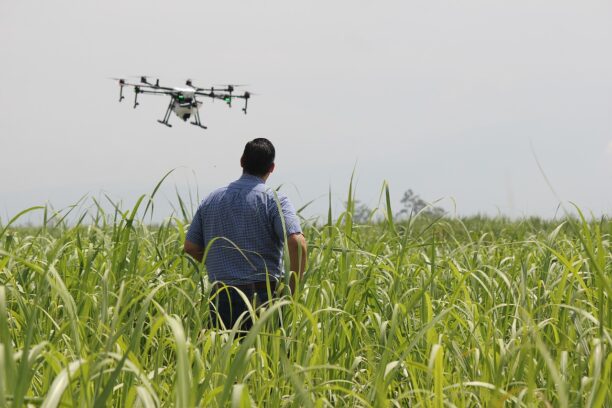
Smart and Precision agriculture: Revolutionizing Agriculture through Technology

About Course

Agriculture is entering a transformative era, where age-old farming methods are being reshaped by cutting-edge technologies. Smart and Precision Agriculture: Revolutionizing Agriculture through Technology takes students on a dynamic journey into how digital tools such as sensors, drones, AI, and IoT are empowering farmers to increase yields, reduce waste, and respond to the challenges of climate change, soil degradation, and food security. This course blends theory and real-world applications, helping students grasp the importance and potential of smart technologies in modern agricultural practices.

Students will explore how big data, geospatial technologies, and 5G connectivity are reshaping every aspect of farming—from soil and crop monitoring to livestock health and resource management. Whether you’re a student of agriculture, environmental science, or engineering, this course will inspire you to think critically and creatively about the future of sustainable food production. By the end of the course, learners will have a strong foundation in smart agriculture’s core concepts, current challenges, and the path forward toward a globally connected and tech-driven agricultural future.

Show More

What Will You Learn?

  • Understand the definition and scope of smart and precision agriculture
  • Identify current challenges facing global agriculture
  • Explore the key applications of smart agriculture in real-world scenarios
  • Learn about sensing, IoT, and communication technologies in agriculture
  • Analyze the role of big data, AI, and machine learning in precision farming
  • Understand how drones, robotics, and geospatial tools enhance decision-making
  • Examine the impact of 5G, cloud, and edge computing on agricultural practices
  • Evaluate the technical and cybersecurity challenges in implementation
  • Discover trends and insights into the global smart agriculture market

Course Content

Introdution
The course begins by introducing the transformative concepts of smart and precision agriculture, emphasizing how technological innovation is reshaping traditional farming to become more efficient, data-driven, and sustainable. Students will first understand the motivation behind this agricultural revolution by exploring pressing global challenges such as climate change, population growth, land degradation, water scarcity, and labor shortages—all of which demand smarter solutions for food production. The section then clearly defines smart and precision agriculture, highlighting how the integration of data, automation, and connectivity enables farmers to optimize resource use, improve productivity, and enhance sustainability. The distinction and synergy between these two approaches are explained, laying a strong foundation for deeper exploration of their applications and benefits.

  • Challenges to Agriculture
    00:00
  • Definition of Smart and Precision Agriculture
    00:00

Applications of Smart Agriculture
Students will delve into real-world applications of smart agriculture across crop management, irrigation, pest control, soil health monitoring, and livestock management. Examples demonstrate how these innovations improve productivity and resource efficiency.

Key Technologies of Smart Agriculture
In this section, students gain a comprehensive understanding of the key technologies driving the smart agriculture revolution. It begins with an overview of foundational hardware and software, including sensing technologies that collect real-time data on soil moisture, weather, nutrients, and plant health—forming the data backbone of precision farming. The Internet of Things (IoT) and advanced communication networks enable seamless connectivity between sensors, equipment, and farm management systems, facilitating remote monitoring and automation. Big Data analytics, Artificial Intelligence (AI), and Machine Learning (ML) are then used to interpret this data, providing predictive insights and optimizing decision-making. Drones and robotics bring automation to the field by performing tasks like aerial imaging, planting, and spraying with high accuracy and efficiency. Geospatial technologies such as GPS, GIS, and satellite imaging offer detailed mapping and crop monitoring, while the integration of 5G ensures ultra-fast, real-time communication across devices and platforms, enhancing operational precision and scalability in smart agriculture systems.

Challenges and Solutions in Implementing Smart Agriculture
Students examine the barriers to adopting smart agriculture—technical limitations, high costs, lack of awareness—and explore practical solutions for overcoming these hurdles through policy, education, and collaboration.

Future of Smart Agriculture
This forward-looking section explores trends such as climate-smart agriculture, farm-to-cloud ecosystems, and autonomous farming, showing students where innovation is heading.

wpChatIcon
    wpChatIcon