Vertical Take-off and Landing (VTOL) Aviation: Soaring Beyond Horizons
Categories: Aerospace

About Course

“Vertical Take-off and Landing (VTOL) Aviation: Soaring Beyond Horizons” is a captivating journey through one of the most revolutionary frontiers in modern aerospace engineering. This course delves deep into the mechanics, history, and applications of VTOL and STOL (Short Takeoff and Landing) technologies, illuminating how these aircraft are reshaping both civilian and military aviation. From iconic helicopters to futuristic electric air taxis and interplanetary VTOL spacecraft, students will uncover the physics, design challenges, and breakthrough innovations behind these marvels of flight.

Learners will explore the real-world impact of VTOL aviation through compelling case studies like the Harrier Jump Jet, F-35 Lightning II, Volocopter, and SpaceX Starship. By bridging the gap between theory and application, this course ignites curiosity and ambition in aspiring aerospace professionals, drone enthusiasts, urban mobility planners, and innovators alike. Whether you’re passionate about flight mechanics, sustainability, or the future of transportation, this course offers the wings to explore it all.

Show More

What Will You Learn?

  • Understand the principles behind VTOL and STOL flight mechanics
  • Identify the historical evolution and major milestones in VTOL aviation
  • Explore the design and operational differences between helicopters, tiltrotors, and ducted fan aircraft
  • Analyze case studies of iconic VTOL aircraft in civilian and military roles
  • Discover the future of VTOL, including electric propulsion and autonomous systems
  • Evaluate challenges like noise, safety, sustainability, and regulation in VTOL integration
  • Recognize VTOL’s expanding role in emergency response, urban mobility, and interplanetary missions

Course Content

Introduction
The introduction sets the stage for understanding how Vertical Takeoff and Landing (VTOL) aviation is poised to revolutionize the future of air transportation by offering flexible, space-efficient flight solutions for both urban and remote environments. It provides an overview of the evolution of VTOL technology—from the early days of rotorcraft to modern electric VTOL aircraft—and traces the parallel development of Short Takeoff and Landing (STOL) aircraft that enable operations in terrain-restricted and infrastructure-poor regions. This ebook aims to comprehensively explore the engineering mechanics, civilian and military applications, technological challenges, and promising future of VTOL aviation, including detailed case studies that illustrate the real-world performance and impact of both VTOL and STOL aircraft systems.

  • The significance of VTOL aviation in transforming air transportation.
    00:00
  • Overview of VTOL technology and its historical development.
    00:00
  • Historical development of STOL aircraft
    00:00
  • The scope of the ebook: Exploring the mechanics, applications, challenges, and future of VTOL aviation, including Short Takeoff and Landing (STOL) capabilities.
    00:00
  • Introducing case studies of STOL and VTOL aircraft to showcase their real-world applications.
    00:00

Chapter 1: Short Takeoff and Landing (STOL) Capabilities
This chapter introduces STOL aircraft, highlighting their ability to operate in constrained environments such as rugged terrains, short runways, and remote locations. It explores design considerations for maximizing lift and reducing takeoff distance, discusses their critical role in enhancing regional connectivity, and examines the development challenges. The chapter concludes with a case study of the Pilatus PC-6 Porter, renowned for its rugged and reliable STOL performance.

Chapter 2: The Foundations of VTOL Aviation
Dive into the origins of VTOL aviation, tracing early experimental concepts and the evolution of rotorcraft, including helicopters. This chapter explains the breakthroughs in fixed-wing VTOL aircraft, the emergence of tiltrotors and tiltwings, and their revolutionary influence on aviation. The Bell Boeing V-22 Osprey serves as a detailed case study, showcasing how VTOL technology transformed military transport capabilities.

Chapter 3: Mechanics of VTOL Technology
This chapter focuses on the engineering principles behind VTOL aircraft, such as vertical lift, thrust vectoring, rotor systems, and ducted fans. It explains how VTOL aircraft achieve flight stability and transition between vertical and horizontal flight. Aerodynamic design and control mechanisms are explored, with the Harrier Jump Jet featured as a prime example of versatile VTOL and STOL capabilities.

Chapter 4: Civilian and Commercial Applications of VTOL Aviation
Discover how VTOL aircraft are revolutionizing civil aviation—from air taxis and emergency response to logistics and humanitarian missions. This chapter explores how these aircraft meet urban mobility needs and respond to disasters in hard-to-reach areas. The Volocopter 2X case study exemplifies how electric VTOL aircraft are making urban air mobility a reality.

Chapter 5: Military Applications of VTOL Aviation
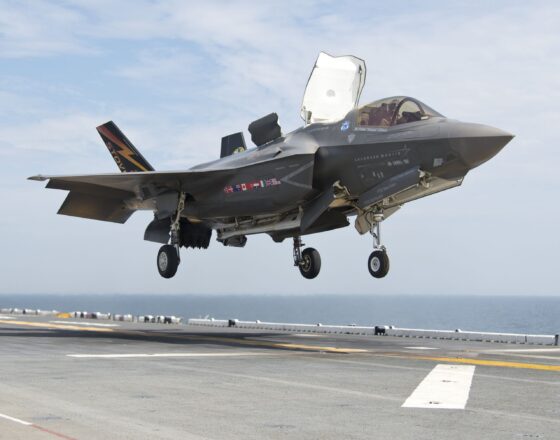
This chapter covers the strategic value of VTOL in modern defense, including rapid deployment, combat readiness, and operation from confined or mobile platforms like aircraft carriers. It highlights fighter jets, VTOL drones, and the role of vertical lift in surveillance. The F-35 Lightning II, with its Short Takeoff and Vertical Landing (STOVL) capability, is profiled to show advanced military applications.

Chapter 6: Addressing Challenges in VTOL Aviation
Explore the critical challenges facing VTOL technology, such as safety in dense urban airspaces, noise pollution, environmental impact, and regulatory concerns. The chapter examines efforts toward sustainable propulsion and public acceptance, concluding with a case study on the Lilium Jet—designed for quiet, zero-emission urban flight.

Chapter 7: Innovations and Future Frontiers of VTOL Aviation
This forward-looking chapter discusses the next generation of VTOL innovation, including electric propulsion, autonomous operations, and AI-driven navigation. It looks at the integration of VTOL aircraft into space exploration and infrastructure planning for future air mobility hubs. The SpaceX Starship is spotlighted as a VTOL spacecraft pushing the boundaries of planetary travel.

Chapter 8: Impact and Future Implications of VTOL Aviation
The final chapter reflects on the broader implications of VTOL aviation on society, economy, and global transportation networks. It assesses how VTOL could redefine connectivity and accessibility while highlighting challenges that remain. Through real-world case studies, the chapter demonstrates the growing influence of VTOL in shaping the future of mobility.

Conclusion
The course wraps up with a powerful recap of VTOL aviation's transformative journey—from helicopters and jump jets to electric air taxis and spacecraft. It inspires students to envision a future where VTOL technologies are seamlessly woven into daily life and encourages continued exploration and innovation in this high-flying domain.

wpChatIcon
    wpChatIcon